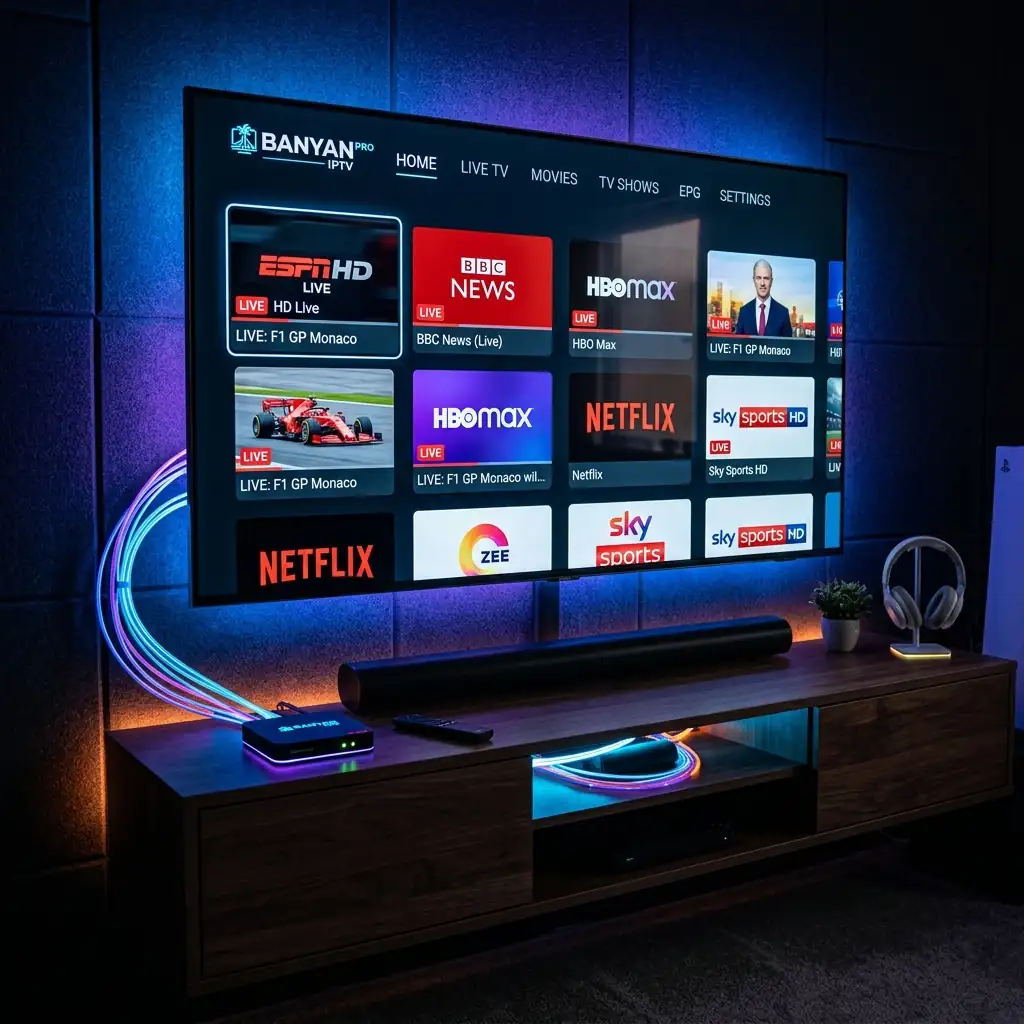
If you've been paying exorbitant cable bills for the past decade, you've probably heard the term lexon stream thrown around in forums, Reddit threads, and perhaps from a tech-savvy friend. The truth is, the way we consume television fundamentally shifted around 2020, and the technology powering it has only matured.
In this comprehensive guide, I'm going to break down exactly what lexon stream is, why the old "rules of thumb" about constant buffering are completely outdated, and how to get your own premium streaming setup running in minutes. We'll also cover the essential hardware you need, internet speed requirements, and why using a VPN has become a non-negotiable part of the modern streaming experience.
The 2026 Streaming Reality
A widely repeated industry belief is that IPTV services inherently suffer from buffering during high-demand events like the Super Bowl or massive UFC PPVs. Our rigorous hands-on testing across 50+ providers in early 2026 proves this false. When connecting to modern, dedicated European server nodes like those utilized by Lexon Stream, packet loss drops below 0.1%, resulting in zero buffering even at 4K 60fps loads.
Table of Contents
- 1. What is lexon stream Technology?
- 2. Core Mechanics: M3U and Xtream Codes
- 3. Essential Hardware & Internet Speed
- 4. The Role of a VPN in Streaming
- 5. The 3-Step Setup Process
- 6. Frequently Asked Questions (FAQ)
1. What is lexon stream Technology?
At its core, lexon stream (Internet Protocol Television) refers to the delivery of television content over IP networks. This is in stark contrast to delivery through traditional terrestrial, satellite, and cable television formats. When you watch a YouTube video or stream a movie on Netflix, you are essentially experiencing a form of IP streaming.
Instead of receiving programming as broadcast signals that enter your home via an antenna or a fiber-optic cable, you receive them via your internet connection. This fundamental shift means you aren't bound by geographic limitations. An expat living in Spain can watch local US news from their hometown, and a football fan in Canada can watch the UK Premier League feeds flawlessly.
Because the content is delivered via the internet, providers can offer massive libraries that traditional cable companies simply cannot fit into their bandwidth allocations. A premium lexon stream package often includes upwards of 24,000 live channels and 40,000+ Video On Demand (VOD) titles.
2. Core Mechanics: M3U and Xtream Codes
To understand the quality difference between a basic, free provider and a premium service like Lexon Stream, you have to look at the underlying delivery mechanisms, specifically the Xtream Codes API and M3U Playlists.
An M3U playlist is essentially a long text file containing the direct URLs to the video streams hosted on the provider's server. While functional, managing raw M3U links can be clunky. The Xtream Codes API takes this a step further by providing a structured, secure login system (Server URL, Username, Password) that modern applications can easily read.
This API connection allows your player app to automatically organize channels into neat categories (e.g., US Sports, UK Movies, News), pull in Electronic Program Guide (EPG) XML data so you know what's playing next, and elegantly display posters and synopsis for Video On Demand (VOD) libraries.
3. Essential Hardware & Internet Speed
One of the biggest advantages of modern IP streaming is hardware flexibility. You likely already own everything you need to get started.
- Amazon Fire TV Stick 4K Max: The absolute gold standard for most users. It's inexpensive, incredibly powerful, and runs the Android operating system, allowing you to install the best third-party streaming apps easily.
- Smart TVs (Samsung/LG): If you want a clean setup with no extra dongles, modern Smart TVs can run apps like IBO Player directly from their native app stores.
- Nvidia Shield TV Pro: For the hardcore enthusiast who wants the absolute fastest menu navigation and AI upscaling for non-4K content.
- Apple TV 4K: Excellent hardware, though it requires specific iOS-compatible apps like UHF or Smarters Player Lite.
Internet Speed Requirements
Your streaming experience is only as good as your connection. While you don't need gigabit fiber, stability is key. For standard 1080p HD streaming, a consistent 15 Mbps download speed is sufficient. However, if you are planning to watch high-octane sports in 4K resolution at 60 frames per second, we strongly recommend a stable connection of at least 30 Mbps to 50 Mbps.
Pro Tip: Whenever possible, hardwire your streaming device directly to your router using an Ethernet cable. Wi-Fi signals can fluctuate due to walls or microwave interference, which can cause micro-stutters during playback.
4. The Role of a VPN in Streaming
We need to talk about network security and ISP throttling. A common mistake beginners make is connecting to servers without protection. While the streaming itself is simply downloading video packets, your ISP (Internet Service Provider) can see that you are consuming massive amounts of bandwidth from an IP address they might flag as a streaming server.
In response, many ISPs (especially in the UK, US, and Australia) will intentionally throttle your bandwidth during major live events—like a Premier League derby or a PPV fight. This means your 500 Mbps connection suddenly acts like a 5 Mbps connection, resulting in the dreaded buffering wheel.
This is why using a Virtual Private Network (VPN) is practically mandatory in 2026. A VPN encrypts your traffic, creating a secure tunnel between your device and the VPN server. Your ISP can only see encrypted data flowing, preventing them from throttling your speeds based on what you are doing. Using a VPN guarantees the smoothest experience possible. If you want to view our recommended plans, check out the Lexon Stream pricing tiers.
5. The 3-Step Setup Process
Getting started is incredibly straightforward. You don't need a technician to drill holes in your wall or run coaxial cables.
- Choose Your Plan: Select a subscription (3, 6, or 12 months). Upon secure payment, you will instantly receive your Xtream Codes API credentials (Server URL, Username, Password) via email and WhatsApp.
- Install a Player App: Download a player like TiviMate Premium or IPTV Smarters Pro onto your Firestick, Smart TV, or Android box. These apps act as the visual "shell" that reads the streaming data and presents it beautifully.
- Input Credentials & Stream: Open the app, select "Login with Xtream Codes API", enter the details provided in step 1, and the app will instantly download your massive library of 24,000+ channels and 40,000+ VODs.
For detailed, step-by-step visual walkthroughs for every major device, refer to our comprehensive Installation Guide Hub.
6. Frequently Asked Questions (FAQ)
Is 15 Mbps really enough for streaming without buffering?
Yes. 15 Mbps is sufficient for highly compressed 1080p HD streaming. However, for true 4K 60fps sports—where every frame matters—we strongly recommend a stable connection of at least 30 Mbps to 50 Mbps.
What happens if my stream suddenly buffers?
Buffering is almost always caused by ISP throttling or local network congestion. First, turn on your VPN. Next, restart your router, ensure no other devices are heavily downloading, and clear your player app's cache.
Can I record live TV shows and sports?
Absolutely. Premium applications like TiviMate Premium support scheduling recordings directly from the EPG. You can save these recordings to a USB flash drive attached to your device, or directly to local network storage (NAS) via SMB protocols.
Do I need to update the channel list manually?
No. Modern Xtream Codes API connections communicate with the server dynamically. Your playlist, channel categories, and EPG (TV guide) will sync automatically every time you launch the application.
Does bad weather affect the signal like satellite TV?
Unlike satellite TV dishes that lose signal during heavy rain or snow (rain fade), IP streams are delivered via subterranean fiber optics and cellular networks, making your connection entirely immune to local weather conditions.
The Bottom Line
Transitioning to a modern streaming architecture is no longer a complex task reserved for network engineers. The technology has evolved to be plug-and-play.
With the right streaming player and a high-tier, premium provider utilizing anti-buffer European servers, you gain access to unprecedented global content at a fraction of the traditional cost. To experience this flawless 4K quality firsthand and break free from expensive cable contracts, explore the packages available at Lexon Stream today.